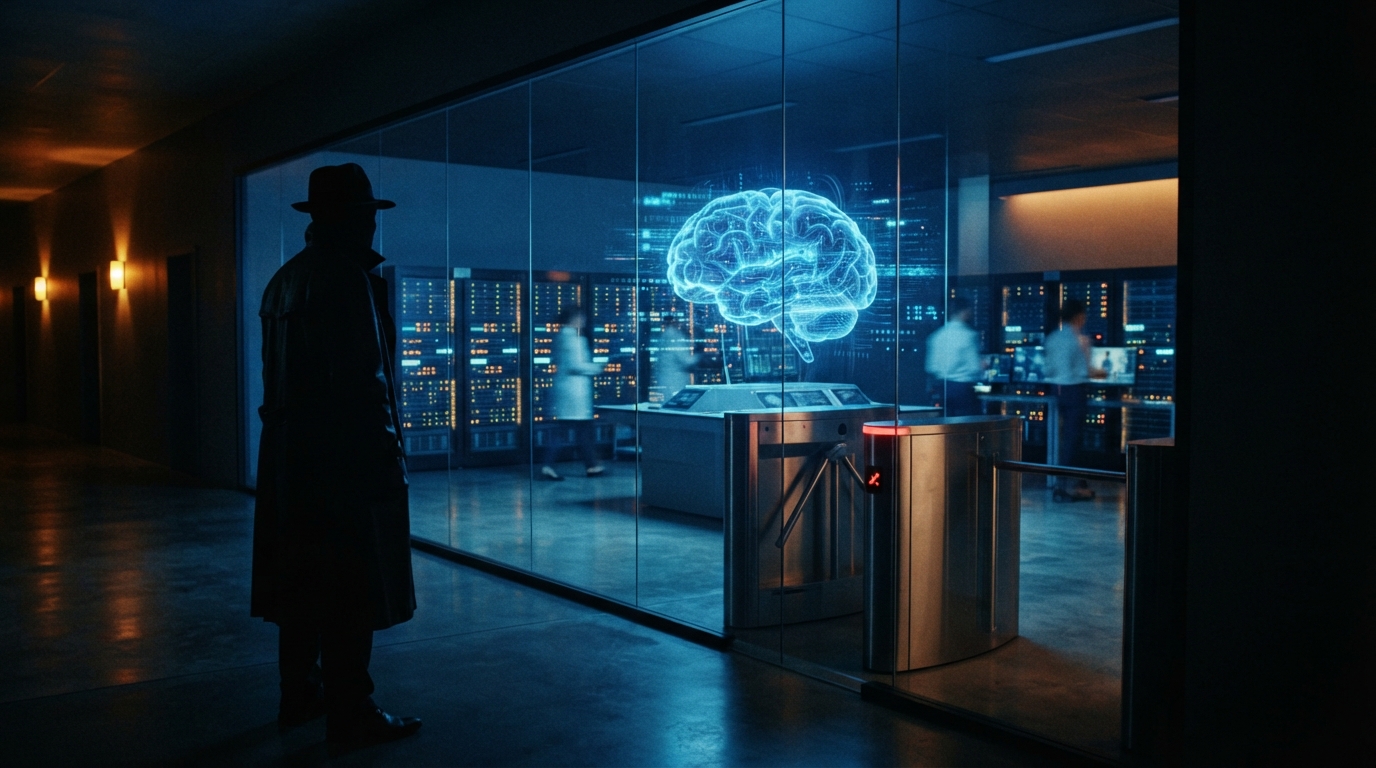
When I think about AI companies, I picture engineers in hoodies, whiteboards covered in math, and maybe a ping pong table in the corner. I don’t picture former CIA officers walking the halls. But that’s exactly where things are heading.
The biggest AI labs in the world are now hiring people who used to catch spies for a living. They’re also locking down parts of their offices and keeping a closer eye on where their staff travel. It sounds like the plot of a spy thriller, but it’s real, and it tells us a lot about how valuable AI has become.
Let’s break down what’s happening and why it matters.
AI Labs Are Hiring Former Spies
On November 24, 2026, the Financial Times reported that frontier AI labs and Big Tech companies are responding to rising state-sponsored espionage threats by recruiting former CIA officers, restricting staff movements, and tightening who can access what inside the company.
The numbers are striking. According to AI Weekly’s summary of the report, which cites data from Revelio Labs, Anthropic made 33 counterintelligence hires in 2026, up from nine in 2024. OpenAI rose to 22 from nine, and Nvidia added 16.
That’s not a small security team getting a little bigger. That’s a whole new department being built.
OpenAI has also changed its offices. As The Next Web reported, the company has hired from the CIA and walls off parts of its offices with “tented spaces” and turnstiles that separate private meeting rooms from public ones. Anthropic, meanwhile, has recruited from the US intelligence community for “internal risk” roles.
Key Facts at a Glance
- What happened: Top AI labs are hiring former CIA and intelligence officers to protect against spying.
- Who’s involved: Anthropic, OpenAI, and Nvidia, among others.
- Anthropic: 33 counterintelligence hires in 2026, up from 9 in 2024.
- OpenAI: 22 hires, up from 9, plus “tented spaces” and turnstiles in its offices.
- Nvidia: 16 counterintelligence hires.
- Other steps: Restricting staff movements and tightening internal access.
- Source: Financial Times, reported November 24, 2026.
- The worry: State-sponsored espionage, insider threats, and theft of AI technology.
Why Would Anyone Spy on an AI Company?
Here’s the simple answer. AI models are now some of the most valuable things on the planet.
A top AI model takes years of research, thousands of powerful chips, and billions of dollars to build. If someone could steal the finished product, or even the secret recipe behind it, they could skip all of that work and money.
The most valuable piece is something called the model weights. Think of them as the brain of the AI. They’re a huge file of numbers that holds everything the model learned during training. If someone walks out with the weights, they basically walk out with the whole model.
Then there’s the research itself. New training tricks, unreleased models, and internal test results can give a rival country or company a big head start.
So when governments see AI as a key to economic power and national security, AI labs become targets. That’s why these companies are now treating their work less like a typical tech startup and more like a defense contractor.
What Counterintelligence Actually Means
Counterintelligence sounds fancy, but the idea is simple. It’s the work of stopping other people from spying on you.
In a company, that can include things like:
- Watching for unusual behavior, like someone downloading files they don’t need for their job.
- Checking out meeting rooms for hidden listening devices.
- Training employees to spot recruitment attempts, like a friendly stranger at a conference who asks a few too many questions.
- Controlling who can enter certain rooms or see certain projects.
- Advising staff about the risks of traveling with company devices.
Former CIA officers know these tricks from the other side. They’ve spent careers recruiting sources and protecting secrets. That experience is exactly what AI labs want now.
The Insider Threat Problem
One of the biggest worries isn’t a hacker breaking in from outside. It’s someone already inside.
That’s what Anthropic’s “internal risk” roles are about. An insider threat could be an employee who is pressured, paid, or tricked into sharing secrets. It could also be someone who simply makes a careless mistake, like leaving a laptop unlocked in a coffee shop.
AI companies hire a lot of brilliant people from all over the world. That’s a big part of why American AI is so strong. But it also makes security tricky. Companies have to protect their secrets without treating every employee like a suspect.
A piece from Just Security makes this point well. It argues that the right response is neither to wave the problem away nor to bar foreign talent, and that US labs can keep recruiting the world’s best researchers while safeguarding national security.
I think that’s the balance everyone is trying to find.
Where Does China Fit In?
Much of the concern centers on China. Some reporting points to China’s 2017 National Intelligence Law, which says organizations and citizens must support and cooperate with state intelligence work.
It’s important to be fair here, though. China has rejected the espionage allegations. And having a law on the books doesn’t prove that any specific person or company has been told to spy.
Still, the AI race between the US and China is real. Both countries see AI as central to their future. When the stakes are that high, it makes sense that companies would get more careful.
What This Means for the Rest of Us
You might be thinking, “Okay, but I don’t run an AI lab. Why should I care?”
Here’s why. This story shows how much AI has changed in just a few years. Not long ago, AI was mostly a research project. Now it’s treated like a national treasure that needs guarding.
That shift affects all of us in a few ways:
- AI is becoming a security issue, not just a tech issue. Expect more government involvement in how AI is built and shared.
- Working in AI may feel different. More badges, more locked doors, and more rules about travel and devices.
- Small businesses can learn from this too. You don’t need ex-spies, but basic habits like strong passwords, limited access to sensitive files, and care with company laptops go a long way.
My Take
Honestly, my first reaction was, “Wow, this sounds like a movie.” But the more I read, the more it made sense.
When something is worth billions of dollars and could shift the balance of power between countries, people will try to steal it. AI labs hiring former CIA officers isn’t paranoia. It’s a sign that they finally understand what they’re holding.
What I’ll be watching is how they handle the balance. Too little security, and their work could end up in the wrong hands. Too much, and they could scare away the global talent that makes them great in the first place.
What do you think? Is this smart protection, or are AI companies turning into something that looks a little too much like a spy agency? Let me know in the comments.




Leave a Reply