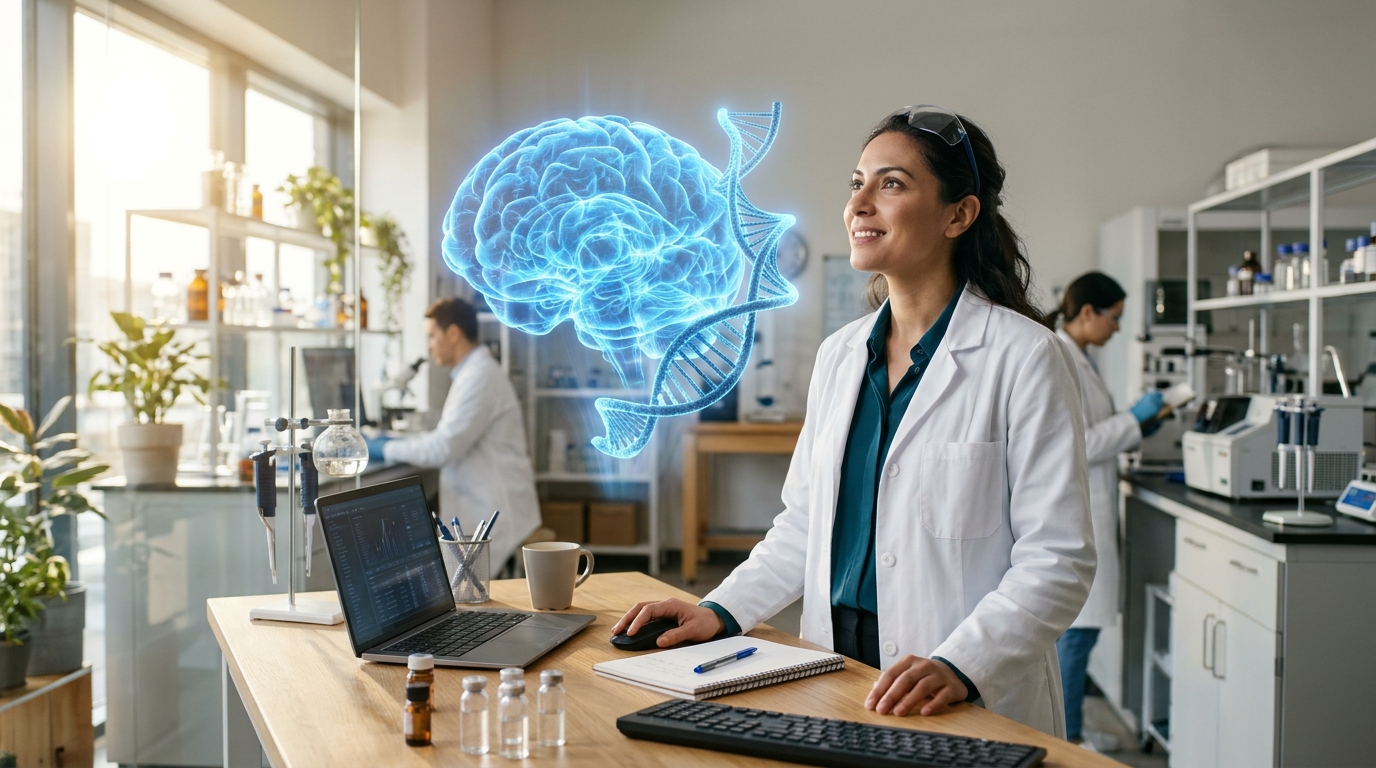
Cancer, Alzheimer’s, Heart disease, Gone in less than ten years?
That’s the promise Anthropic CEO Dario Amodei made this week, and it stopped me cold. Most of us have watched someone we love fight one of these diseases. So is this real hope, or just a big pitch to investors? Here’s what he said, what AI is already doing in hospitals right now, and what doctors really think.
AI Cure for Cancer: What Dario Amodei Actually Said
In a 42 minute IPO roadshow video released on Tuesday, November 10, 2026, Amodei predicted that “cancer, Alzheimer’s, heart disease, mental illness: these will be relics of the past in, I think, less than a decade.”
That’s not a throwaway line. He said it in a video made for investors as Anthropic prepares to go public, which means the whole financial world was watching. And this isn’t a new idea for him. Amodei has argued for a couple of years now that powerful AI could squeeze decades of medical progress into just a few years.
The core idea is simple. Medical research is slow because humans can only test so many ideas at once. AI could run through millions of possibilities, spot patterns no person would notice, and point scientists toward the experiments most likely to work.
Key Facts at a Glance
- Who: Dario Amodei, CEO of Anthropic
- What: Predicted that cancer, Alzheimer’s, heart disease, and mental illness could be “relics of the past” in under ten years
- When: November 10, 2026
- Where: A 42 minute IPO roadshow video for investors
- Why it matters: AI is already speeding up drug discovery, cancer testing, and clinical trial matching
- The pushback: Many doctors say a full cure in ten years is unrealistic because clinical trials take so long
How AI Could Help Cure Cancer
Here’s the part that surprised me most. This isn’t only a future promise. AI is already changing cancer research right now, in labs and hospitals.
Finding new drugs in months, not years. Normally, discovering a new cancer drug can take a decade or more. Cancer doctor and author Siddhartha Mukherjee says his company, Manas AI, has cut early drug discovery from nearly eight years to just three or four months. It mixes machine learning with physics and chemistry to make that possible. Its AI can design drug molecules atom by atom and spot weak points on disease causing proteins in hours instead of years.
Spotting blood cancers more accurately. At a major medical conference this month, researchers from ALMA Genomics, the University of Pennsylvania, MIT, and other institutions shared ALMA 3, an AI model trained on DNA methylation data from more than 110,000 patient samples. In independent testing, it detected blood and lymphatic cancers with 99.5% sensitivity and can sort them into 81 subtypes, which helps doctors pick the right treatment.
Smarter testing for patients. In an early study of 80 lung cancer cases, researchers at Memorial Sloan Kettering Cancer Center and Mount Sinai found that AI working alongside pathologists could have skipped one rapid genetic test in 33% of cases, without missing a single patient who needed it. That means faster answers and less waste, without taking the doctor out of the loop.
Matching patients to clinical trials. Leaders at the National Institutes of Health say AI could help patients find clinical trials they qualify for. Right now, many people never hear about a trial that could have helped them.
AI and Alzheimer’s: Why This Could Be the Bigger Story
Cancer gets most of the headlines, but Alzheimer’s might be where AI matters most. For decades, it has been one of the hardest diseases in medicine. Many promising drugs have failed in late stage trials, and families are often left with very few options.
Part of the problem is that the brain is incredibly complex. Alzheimer’s starts quietly, years before anyone notices memory slipping. That’s exactly the kind of challenge AI is built for. It can sift through huge amounts of brain scans, genetic data, and patient records to look for early warning signs and new treatment targets that humans might miss.
AI is also making brain research feel less like science fiction. This month, scientists showed that an AI powered approach can make experimental bionic vision more precise, helping predict the flashes and shapes of light seen by a blind man with a brain implant. If AI can help us understand how one person’s brain sees, it’s not hard to imagine it helping us understand how a brain forgets.
What Doctors Say About the AI Cure Prediction
Here’s where we need to be honest. Not everyone is cheering. Many doctors and researchers agree that AI will play a big role in fighting cancer and Alzheimer’s. But as TechSpot reports, some experts say there is no chance of a complete cure within ten years because of the long clinical trials involved.
That’s a fair point. Even if AI discovers a perfect drug tomorrow, it still has to be tested on real people for safety, which usually takes years. AI can speed up the discovery part, but it can’t skip the testing part.
Some critics also point out the timing. Amodei made this prediction in a video for investors right before Anthropic’s public stock offering, and bold promises can help sell a company. Doctors on the front lines also stress that AI should support human judgment, not replace it.
So who’s right? Probably a bit of both. A full cure for every cancer by 2036 sounds very ambitious. But much faster progress, earlier detection, and better treatments? That already seems to be happening.
What This Means for You and Your Family
You don’t have to wait ten years to feel the impact. Here’s what AI in medicine could mean much sooner:
- Earlier diagnosis: AI tools that spot cancer or brain changes before symptoms appear
- Personalized treatment: AI helping doctors pick the therapy most likely to work for you specifically
- Easier access to trials: AI matching patients with research studies they qualify for
- Faster new medicines: drug discovery that moves in months instead of years
If you or someone you love is facing one of these diseases, it’s worth asking your doctor whether AI assisted testing or clinical trials might be an option.
Final Thoughts: Is an AI Cure for Cancer and Alzheimer’s Possible?
I went into this story a little skeptical, and I still think “relics of the past in under a decade” is a big promise. But after digging into what AI is already doing in labs and hospitals, I can’t help feeling hopeful. Faster drugs, earlier diagnoses, smarter testing. Those aren’t dreams anymore.
Maybe AI won’t cure everything by 2036. But if it helps even one family get a few more good years together, that’s worth getting excited about.
What do you think? Is Amodei being too optimistic, or are we closer than we realize? I’d love to hear your thoughts in the comments.




Leave a Reply