
Here’s something you probably didn’t notice last week. Starting November 7, 2026, text written by Grok through its developer API started carrying a hidden signature. You can’t see it. You can’t copy it out. You can’t delete it with a find and replace. But it’s there, tucked inside the actual words, quietly marking the text as written by AI.
It sounds like something out of a spy movie, but it’s real, and it’s on by default. If you’ve ever wondered how anyone could tell whether an essay, a product review or a news story was written by a human or a machine, this is one of the most serious answers yet.
So let’s break down what Grok is doing, how an invisible watermark in plain text even works, and what it means for developers, businesses and everyone reading content online.
Grok AI Watermark Goes Live: What Happened
SpaceXSI, the company formerly known as xAI, began adding an invisible watermark to text from its Grok API on November 7, 2026. According to Data Studios, the change is laid out on a new “Output Watermarking” page in the official developer documentation, and it covers seven Grok models.
The watermark is on by default. Developers don’t have to change a single line of code, and nothing visible changes in the text. The company says it’s doing this to comply with the EU AI Act, Europe’s big AI law, which requires AI generated content to be marked in a machine readable way.
Team admins can turn it off, but only model by model, and only after confirming that a legal exception applies to them and accepting full responsibility for any marking rules that still apply.
And there’s an interesting twist. Crypto Briefing reports that this move leaves ChatGPT as North America’s lone holdout among the big AI chatbots when it comes to text watermarking.
Key Facts at a Glance
| Detail | Information |
|---|---|
| Company | SpaceXSI (formerly xAI) |
| What changed | Invisible watermark added to Grok API text |
| Start date | November 7, 2026 |
| Default setting | On |
| Models covered | Seven Grok models (grok-4.7, grok-4.6, grok-4.5, grok-4.3 and three grok-4.20 versions) |
| What gets watermarked | Regular text, structured outputs and tool call arguments |
| Visible changes to text | None |
| How developers can tell | A new response header called x-watermark that says true |
| Can it be turned off? | Yes, by team admins, model by model, only by claiming a legal exception |
| Why | To comply with the EU AI Act |
| Does it affect the free Grok app? | No, the change applies to the developer API for now |
Wait, How Do You Watermark Plain Text?
This is the part that blows most people’s minds, so let’s slow down.
When you think of a watermark, you probably picture a faded logo stamped across a photo. Text doesn’t work like that. There’s nowhere to hide a logo in a sentence. And older tricks, like slipping invisible characters between words, are easy to spot and strip out.
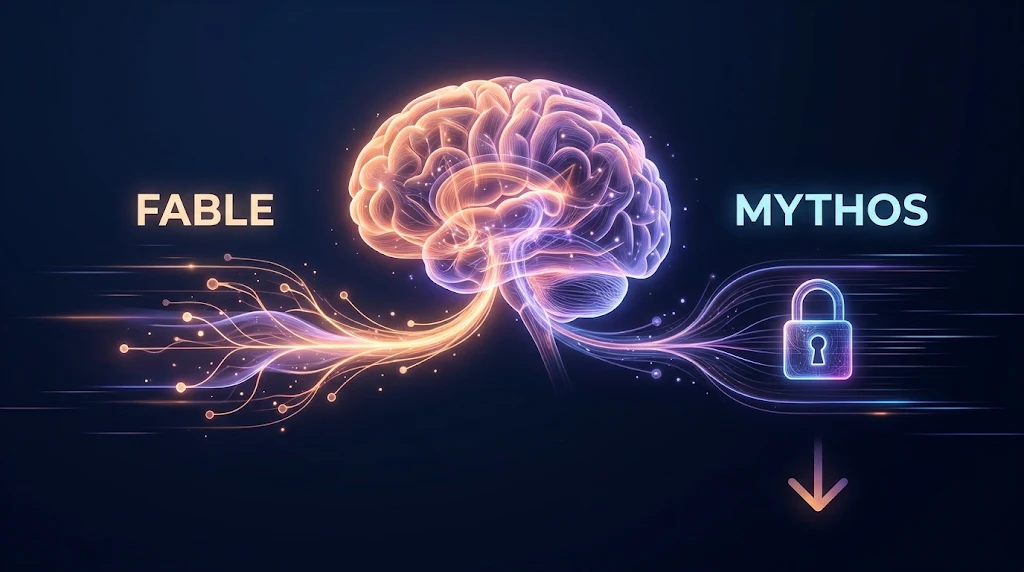
Grok’s watermark works differently. It’s built into the way the AI picks its words in the first place.
Here’s a simple way to picture it. Every time an AI writes, it’s choosing the next word (technically, the next “token,” which can be a word or part of a word) from a bunch of good options. Imagine the AI wants to say a meal was “delicious.” It could also say “tasty,” “amazing” or “fantastic.” All of them work.
A watermark gently nudges those choices according to a secret pattern. It might lean slightly toward “tasty” over “delicious” in one spot, and toward some other word in the next. Any single choice looks completely normal. But across hundreds of words, those tiny nudges add up to a statistical fingerprint that a special detector can pick up.
According to the documentation, the watermark:
- Adds no extra characters
- Adds no hidden text or markup
- Doesn’t change the format of the response
- Can’t be removed by a simple text cleaner, because there’s nothing extra to remove
In other words, a sentence copied from a watermarked Grok answer looks exactly like any other sentence. The signature is in the word choices themselves.
How Detection Works
So if the watermark is invisible, how does anyone find it?
SpaceXSI has a detector that looks at a piece of text and gives one of three answers: “watermarked,” “not watermarked” or “uncertain.”
The longer the text, the stronger the signal. That makes sense when you think about it. One word choice tells you nothing. A few hundred word choices that all follow the same hidden pattern? That’s hard to explain by chance. So a full essay or long article is much easier to identify than a one line reply, which will often land in the “uncertain” zone.
Here’s the catch, though. The detector isn’t open to everyone. Access is granted by application through a form, and the company hasn’t said who qualifies, whether the public will ever get access or whether it will cost money. For now, the people who can actually check text for Grok’s watermark are SpaceXSI and the organizations it approves.
Which Grok Models Are Watermarked
The watermark covers seven models in the Grok API. Here’s how they line up, with standard prices as published on the official models page in early November 2026. The watermark doesn’t change the prices at all.
| Model | Context Window | Input Price (per 1M tokens) | Output Price (per 1M tokens) | Watermarked by Default |
|---|---|---|---|---|
| grok-4.7 | 500K tokens | $2.00 | $6.00 | Yes |
| grok-4.6 | 500K tokens | $2.00 | $6.00 | Yes |
| grok-4.5 | 500K tokens | $2.00 | $6.00 | Yes |
| grok-4.3 | 1M tokens | $1.25 | $2.50 | Yes |
| grok-4.20-reasoning | 1M tokens | $1.25 | $2.50 | Yes |
| grok-4.20-non-reasoning | 1M tokens | $1.25 | $2.50 | Yes |
| grok-4.20-multi-agent | 1M tokens | $1.25 | $2.50 | Yes |
| grok-build-0.1 (coding model) | 256K tokens | $1.00 | $2.00 | Not listed |
Those prices apply to prompts under 200,000 tokens. Above that, both prices double. One curious detail: the coding model, grok-build-0.1, isn’t on the watermark list, and the documentation doesn’t say whether it’s exempt or just hasn’t been added yet.
The policy also only covers text. Grok’s image, video and voice products aren’t part of this change.
Why Grok Is Doing This: The EU AI Act
The main reason behind all of this is Europe.
The EU AI Act includes transparency rules that took effect on August 2, 2026. Under those rules, companies that offer generative AI must add a machine readable mark to AI generated content and make it detectable. That applies to text as well as images, video and audio.
There are a few exceptions. For example, marking isn’t required when AI is just doing basic editing help, or when it doesn’t really change the original content or its meaning. That’s exactly why Grok’s opt out asks admins to confirm a legal exception applies before switching the watermark off.
The stakes are high. Fines for breaking the EU’s transparency rules can reach €15 million or 3% of a company’s worldwide yearly revenue. For AI systems that were already on the market before August 2026, the marking rule kicks in from December 2026. So Grok flipping the switch on November 7 puts it about a month ahead of that deadline.
What Changes for Developers
For most apps, honestly, nothing breaks. Requests stay the same, responses look the same, and no extra characters show up. But there are a few things developers should know.
The New x-watermark Header
The only visible sign of the change is a new response header called x-watermark. When the output has been watermarked, it says true. Developers can log this header with each response to keep a record of which outputs were marked.
How to Opt Out, Step by Step
If a team decides it qualifies for an exception, here’s how turning it off works in the SpaceXSI Console:
- Open Team settings and find the “Model output watermarking” row. It shows On (all models), Off (all models) or Custom.
- Open that row’s settings. Each model has its own checkbox, plus a “Select all” option.
- Uncheck the models you want to opt out of, then confirm by clicking “Opt Out.”
- Wait up to five minutes for new requests to reflect the change.
- Every change is recorded in the team’s audit log.
One important detail: the setting applies to the whole team and every API key in it. So a company can’t keep watermarking on for a customer facing product and turn it off for an internal tool under the same team. The practical workaround is running those projects under separate teams. Some models may also be locked on for certain teams, with no checkbox at all.
Who Should Keep It On and Who Might Turn It Off
| Who | What Makes Sense |
|---|---|
| Apps publishing Grok text to users in Europe | Keep the watermark on, since that’s what the EU AI Act asks for |
| Content and marketing platforms | Keep it on for transparency and legal safety |
| Internal tools for sorting, tagging or data processing | May qualify for an exception and choose to opt out |
| Coding tools | May consider opting out, though they still have to confirm a legal exception |
| AI agent builders | Test carefully before and after, since tool call arguments are watermarked too |
A Heads Up for AI Agent Builders
This is where things get a bit technical, but it matters. The watermark doesn’t just apply to text people read. It also applies to structured outputs (like data in JSON format) and tool call arguments, which are the instructions an AI agent writes when it uses other software.
SpaceXSI says the watermark doesn’t affect quality or speed. But that’s the company’s own claim, and it hasn’t released test results to prove it. So teams running complex agents or data heavy workflows should compare their error rates before and after November 7, just to be safe.
The Open Questions
As exciting as this is, there’s a lot SpaceXSI hasn’t told us yet:
- How accurate is the detector? No accuracy numbers or false positive rates have been published.
- Can it survive editing? Statistical watermarks are known to weaken when text is paraphrased, rewritten or translated. The company hasn’t shared results on that.
- Who gets detector access? The criteria haven’t been made public.
- Does it follow a shared standard? It’s not clear whether other companies’ detectors could read Grok’s watermark.
- Does quality really stay the same? No independent testing has been released yet.
Those questions matter. A watermark that disappears the moment someone runs the text through a rewriting tool is a lot less useful than one that sticks.
What This Means for Everyday People
So why should you care if you’ve never touched an API in your life?
Because more and more of what you read online is written by AI. Product reviews, social media posts, emails, even news summaries. Right now, it’s often impossible to tell what came from a person and what came from a machine.
Watermarks like Grok’s are one of the first real tools for fixing that. If they work well, they could help platforms label AI content, help teachers check homework and help fight fake reviews and spam. And with Europe’s rules now in force, more AI companies are likely to follow.
It’s not a perfect solution. A determined person could still try to rewrite AI text to wash the watermark out. But it’s a big step from a world where we simply had no way to know.
The Bottom Line
Grok’s invisible watermark is a quiet change with big implications. Since November 7, 2026, every piece of text from seven Grok API models carries a hidden statistical signature, built into the very words the AI chooses.
It’s on by default, it’s driven by Europe’s AI Act, and it puts real pressure on the rest of the industry, especially ChatGPT, to follow. There are still big questions about accuracy and who gets to check for it. But one thing is clear: the days of AI text being completely untraceable are starting to end.
And honestly? As someone who reads a lot of content online, I’m glad someone’s finally trying.



Leave a Reply