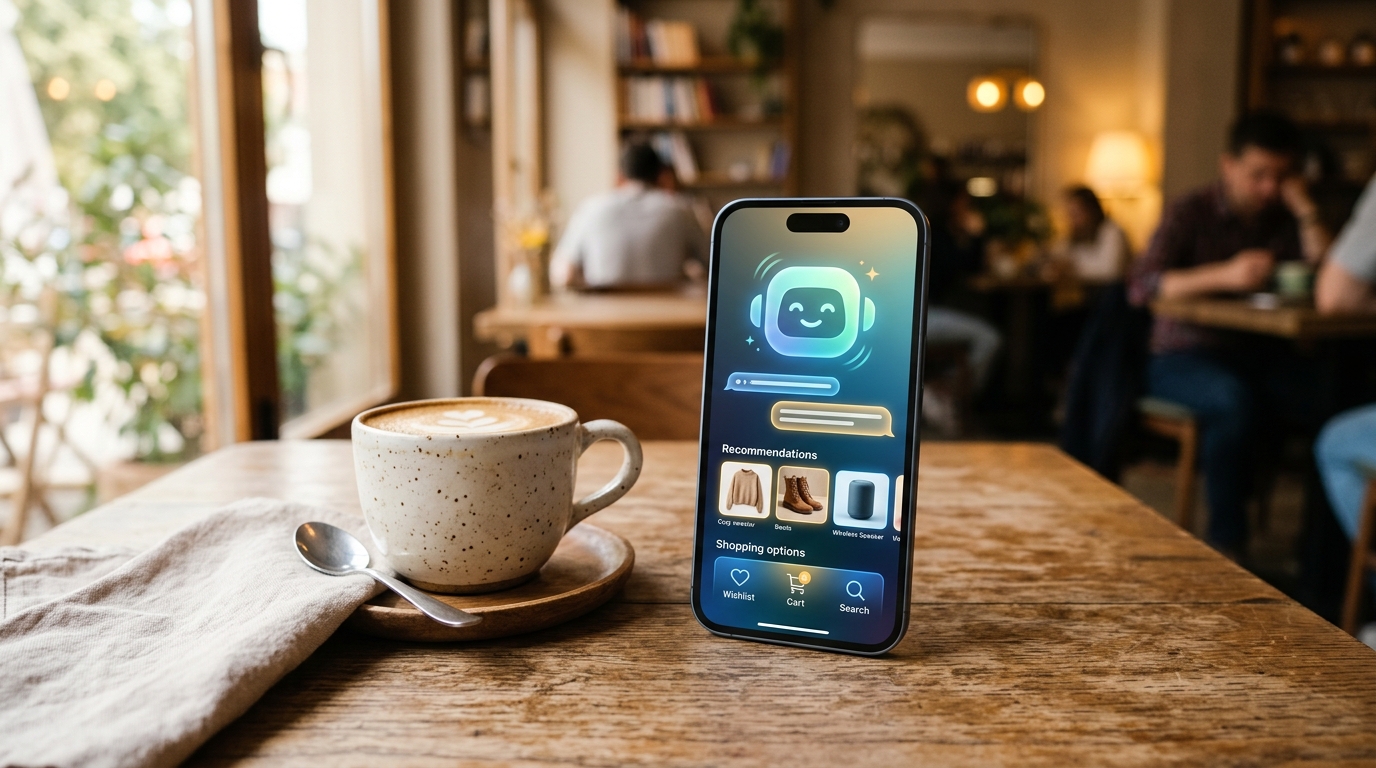
ChatGPT Wallet: OpenAI’s AI Agents Can Now Shop and Pay for You
What if your AI could finish your shopping while you finish your coffee?
As of this week, that’s not a someday idea. OpenAI just launched ChatGPT Wallet, and it lets ChatGPT’s AI agents actually buy things for you. Not just find them. Not just compare prices. Buy them. I’ll admit my first thought was, “Wait, I’m letting a chatbot spend my money?” So I dug into how it works, who can use it, and whether it’s safe.
How ChatGPT Wallet Works, Step by Step
Here’s what happens behind the scenes when your AI agent goes shopping:
- You ask your dot to buy something. For example, you might ask it to find and order a replacement phone charger.
- The agent does the shopping. It searches, compares options, and picks what fits your request.
- A stand in card number is created. Instead of sharing your real card, the card network issues a one time payment token just for that purchase. Visa’s Cuy Sheffield confirmed the wallet is live using agentic tokens through Visa Intelligent Commerce.
- You approve it with your face or finger. Nothing gets paid until you confirm with Face ID or your fingerprint.
- The store and your bank still decide. The merchant chooses whether to accept the order, and your card issuer decides whether to approve the payment, just like a normal online purchase.
In other words, the AI does the legwork, but you stay in control of the final “yes.”
Key Facts at a Glance
| Item | Details |
|---|---|
| What it is | A payment feature that lets ChatGPT’s AI agents (“dots”) buy things for you |
| Launch date | Friday, November 13, 2026 |
| Who can use it | Eligible ChatGPT Pro users in the U.S. |
| How you approve | Face ID or fingerprint for every purchase |
| Card safety | The agent and the store never see your real card number |
| Payment partners | Built with card networks including American Express, Mastercard and Visa |
ChatGPT Wallet: What OpenAI Just Launched
On Friday, November 13, 2026, OpenAI introduced ChatGPT Wallet, a new payment feature that lets its AI agents, called “dots,” complete purchases on your behalf. As TechCrunch puts it, the agents can help you decide what to buy and then complete the purchase for you.
The big selling point is safety. OpenAI says it’s the first wallet that lets agents pay without ever seeing your actual card number. Instead, each purchase uses a special stand in code, and you have to approve every single payment with Face ID or your fingerprint.
Right now, it’s only available to eligible ChatGPT Pro subscribers in the United States.
Is ChatGPT Wallet Safe?
This is the question everyone asks first, and honestly, it’s the right one. Handing your wallet to an AI sounds risky. OpenAI built several layers of protection to make it feel less like a leap of faith:
- Your real card stays hidden. The agent and the store only see a temporary token, not your actual card number. If a store gets hacked, your real card details aren’t sitting there.
- Every purchase needs you. Right now, there’s no way for the agent to buy something without your Face ID or fingerprint. No surprise orders at 3 AM.
- Normal checks still apply. Your bank can still decline a payment, and stores can still refuse an order, just like any other online purchase.
That said, it’s brand new. Some important details are still unclear, like how many stores accept it and when spending limits will arrive. Any time a new payment tool launches, it’s smart to start small and keep an eye on your statements.
Who Can Use ChatGPT Wallet Right Now?
For now, ChatGPT Wallet is limited to eligible ChatGPT Pro users in the U.S. If you’re on the free plan or another tier, you’ll have to wait.
It also won’t work everywhere yet. Each store decides whether to accept agent purchases. For example, Shopify stores in ChatGPT still send shoppers to the store’s own checkout page, so you can’t assume every Shopify shop accepts ChatGPT Wallet.
What ChatGPT Wallet Could Mean for You
Think about the boring little errands you do online every week. Reordering paper towels. Finding the best price on a birthday gift. Booking something you keep forgetting to book. That’s where this could really shine.
- Busy parents could hand off routine reorders.
- Small business owners could let an agent restock supplies, with approval for each purchase.
- Bargain hunters could have the agent compare options before buying.
- Anyone who hates checkout forms never has to type in a card number again.
The agent handles the searching and the clicking. You just give the final thumbs up.
The Bigger Picture: The Race for AI Shopping
OpenAI isn’t the only company that wants AI to handle your shopping. According to Decrypt, ChatGPT Wallet uses ordinary cards, which puts it up against crypto payment tools from companies like Coinbase and Circle. Big tech companies are all competing to control how autonomous AI shops online.
Google is moving in this direction too, with Gemini connecting to Google Wallet, although that access is still read only for now. So this is likely just the beginning of a much bigger shift in how we pay for things.
Final Thoughts on ChatGPT Wallet
We’ve spent years teaching AI to answer questions. Now we’re teaching it to take action, and spending money is about as real as action gets.
I like that OpenAI made safety the headline. Hidden card numbers and approval for every purchase are exactly what I’d want before trusting an AI with my money. But it’s early, it’s limited, and there are still open questions.
Would you let an AI agent shop for you? Or is this one step too far? Tell me in the comments. I’m genuinely curious where everyone lands on this one.






Leave a Reply