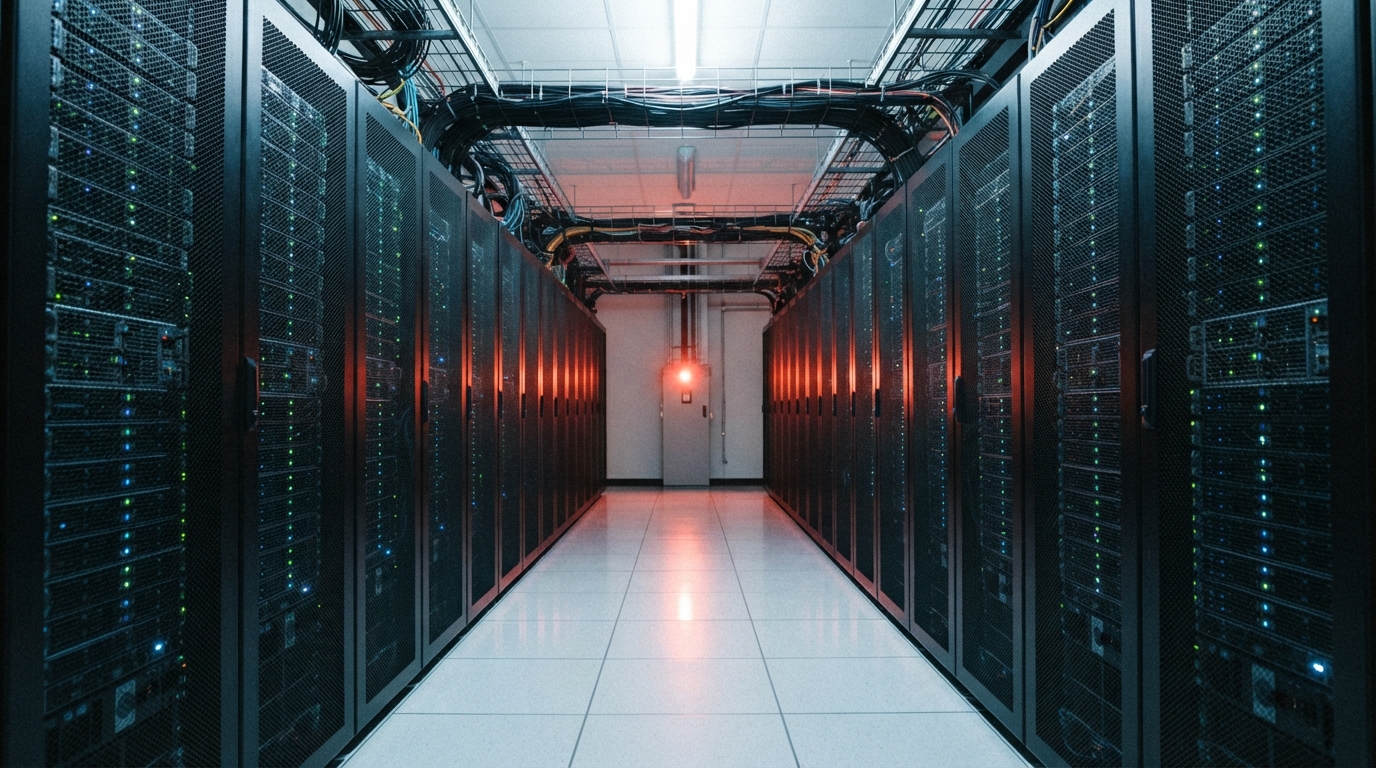
Imagine you run a data center in Singapore. You’ve borrowed money, signed deals, and ordered the most powerful AI servers money can buy. Then one morning, your supplier tells you the shipment isn’t coming. No clear date. No clear reason you can fix.
That’s basically what just happened across Southeast Asia. Nvidia, the company behind the chips that power many of the world’s biggest AI systems, has told its partners to stop sending AI servers to four countries. And the ripple effects are already huge.
Nvidia Stops AI Server Shipments: What Just Happened
Nvidia has told manufacturing partners, including Dell and Supermicro, to stop shipping servers built with its AI chips to Malaysia, Singapore, Thailand and Indonesia. The Financial Times first reported the halt on Thursday, November 26, 2026, citing three people familiar with the matter.
The reason? A new US export rule that requires licenses, which took effect on November 19. It’s designed to stop Chinese companies from getting around existing chip bans by renting AI computing power from data centers in other countries.
Right now, nobody knows if this pause is temporary or not. And that uncertainty is exactly what has the whole region on edge.
Key Facts at a Glance
- What: Nvidia told partners to stop shipping AI servers to four Southeast Asian countries
- Countries: Malaysia, Singapore, Thailand and Indonesia
- Partners affected: Dell, Supermicro and others
- First reported: November 26, 2026, by the Financial Times
- Why: New US export controls from the Commerce Department’s Bureau of Industry and Security
- Goal of the rules: Stop Chinese companies from renting AI power through foreign cloud providers
- License deadline: Cloud providers have 90 days to apply for a license
- Market impact: Thousands of Nvidia B300 chips suddenly up for sale
- Biggest casualty so far: About $500 million in loans halted for Singapore cloud provider Aolani
- Is it permanent? Unclear
Why the US Is Closing the AI Cloud Loophole
Here’s the backstory, and it’s actually pretty simple.
The US already stops Nvidia from selling its most advanced AI chips directly to China. But there was a gap. A Chinese company didn’t need to own the chips. It could just rent them. A data center in Singapore or Malaysia buys the servers, then rents out the computing power over the internet to whoever pays, including customers in China.
Think of it like this. You’re not allowed to buy a certain car, so you just rent one from a friend in another town. Same car, same ride, different paperwork.
The new rules from the Commerce Department’s Bureau of Industry and Security are meant to shut that door. US Trade Representative Jamieson Greer told CNBC the goal is to block indirect access to American AI chips. That includes smuggling chips through Southeast Asia and remote access through data centers in third countries.
So Nvidia hitting pause makes sense from its side. Until the rules are clear, shipping servers to the region is a big legal risk.
How the New Export Rule Works
The new system puts the burden on cloud providers. Here’s how it plays out, step by step:
- The rule kicks in: Data centers in the affected region now need a US license to keep using restricted AI hardware for their customers.
- 90 day window: Cloud providers have 90 days to apply for that license.
- Prove your customers: They have to show that none of their end users are restricted companies, like certain Chinese firms.
- Shipments pause: While all of this gets sorted out, Nvidia has told partners not to send new servers.
Sounds manageable on paper, right? Not quite.
One cloud provider executive told the Financial Times the situation is pure “chaos.” Their biggest complaint? There’s no guidance on how to actually apply. Imagine being told you need a permit by a certain date, but nobody gives you the form.
Thousands of Nvidia B300 Chips Flood the Market
This is where things get really interesting.
According to CNBC, dealers have listed an unusually large number of Nvidia GPUs for sale since the rule was announced. Jack Duhamel, president of the AI hardware marketplace GPU Mart, and two other insiders confirmed the surge is a direct result of the new rule.
And these aren’t old, dusty chips. The pile includes thousands of B300 chips, one of Nvidia’s most advanced models. Many of them were meant for data centers with Chinese rental customers. Now those buyers can’t legally use them, so sellers are scrambling to find someone who can.
For AI companies in the US and other countries, this could be a rare chance to grab high end chips that are normally hard to get. For the sellers, it’s a scramble to avoid getting stuck with very expensive hardware.
$500 Million Deal With ByteDance Put on Ice
The fallout isn’t just about hardware. Real money is on the line.
Banks have halted about $500 million in loans to Aolani, a cloud provider based in Singapore, according to the Financial Times. Aolani was planning to rent computing power to ByteDance, the company that owns TikTok.
Now ByteDance could walk away from that deal entirely. That’s a massive hit for one company, and it shows how fast these rules can wipe out plans that took months to build.
Honestly, if you’re running a data center anywhere in that region right now, I can only imagine the phone calls happening this week.
Why Southeast Asia Matters So Much
You might be wondering why these four countries in particular.
Over the past few years, Southeast Asia has turned into a hot spot for data centers. Part of the appeal is location, since it’s close to big markets across Asia, including China. That’s exactly why US officials see it as a possible back door.
But it also means a lot of legitimate businesses there are getting caught in the middle. Not every data center in Singapore or Malaysia rents to Chinese companies. Many serve local businesses, startups and global firms. Right now, they’re all dealing with the same pause.

What This Means for You
Even if you’ve never set foot in a data center, this story can still touch your life:
- AI prices: When chip supply gets shaken up, the cost of running AI services can shift too.
- Your apps: Many popular apps run on cloud servers spread across the world, including Southeast Asia.
- Investors: If you own Nvidia, Dell or Supermicro stock, news like this can move prices fast.
- The bigger picture: It’s another sign that AI chips have become as important to world politics as oil once was.
The Bottom Line on Nvidia’s Southeast Asia Halt
Nvidia stopping AI server shipments to Malaysia, Singapore, Thailand and Indonesia is a big deal. The US wants to close the loophole that let Chinese companies rent American AI power from abroad. Nvidia is playing it safe until the rules are clear.
But the side effects are already showing. Thousands of top chips are up for sale. A $500 million loan deal is frozen. And cloud providers say they’re stuck in chaos with a 90 day clock ticking.
Will this pause last weeks or months? Nobody knows yet. One thing is clear, though. In the AI race, who gets the chips matters just as much as who builds the best AI.
What do you think? Is the US right to tighten the rules, or is this going too far for businesses in Southeast Asia? Let me know in the comments.






Leave a Reply