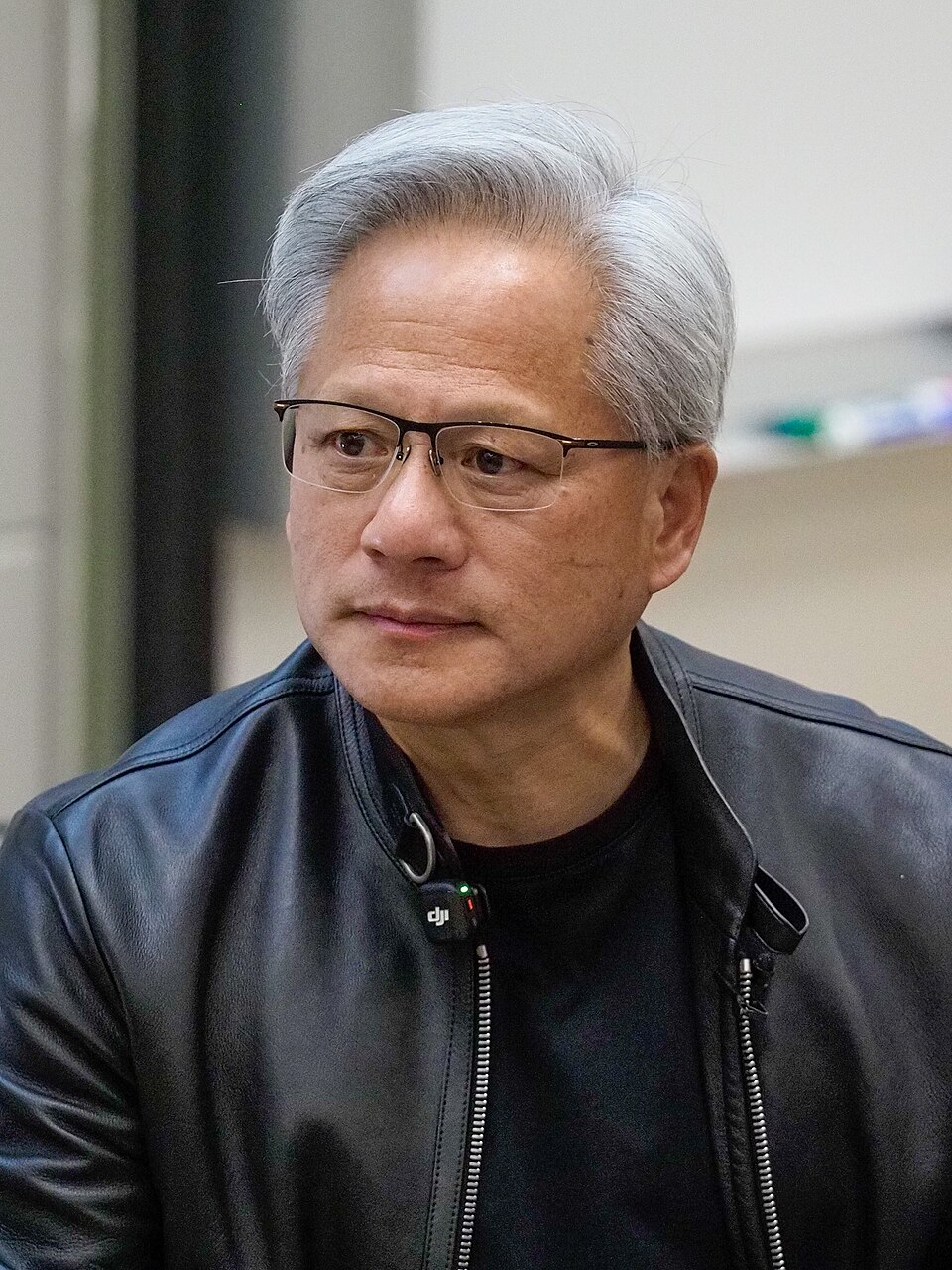
The most important company in artificial intelligence just lost the man who built it. On Thursday, November 12, 2026, Nvidia’s board announced that Jensen Huang has resigned as President, Chief Executive Officer and a member of the Board, effective immediately. Huang cofounded Nvidia in 1993 and spent 33 years turning a struggling graphics chip startup into a $4 trillion company whose chips power almost every major AI system in the world.
This is not just a story about one executive. Nearly every big AI company, from cloud giants to chatbot makers, depends on Nvidia hardware. So when Nvidia’s leadership shakes, the whole AI field feels it. Here is what happened, what it means for Nvidia’s business and finances, and what it could mean for the future of AI.
Why Huang Stepped Down
Huang resigned amid reports of two extramarital affairs, including one with a woman U.S. intelligence officials suspected of being a Chinese spy. U.S. lawmakers had publicly called for his resignation before the announcement, and he has since agreed to testify before Congress. The investigation is still developing, so details may change. For the purposes of this article, the bigger question is what his sudden exit means for Nvidia and for AI.
The Latest Updates
The story is still moving fast. Here is what has come out since the resignation:
- Congress is turning up the pressure. Huang faces a congressional subpoena if he does not agree to testify before House lawmakers investigating the allegations.
- A third affair has been alleged. Yahoo Finance reports that allegations of a third affair have emerged. Nvidia is expected to continue its own investigation into his relationship with Alice Huang, a Megaspeed executive alleged to have links to Chinese government intelligence.
- Trump had urged him to stay. According to CNN, President Donald Trump had encouraged Huang to fight the calls to step down.
- The stock kept falling. PC Gamer reports that Nvidia’s share price dropped to its lowest level since June 2025.
Key Facts at a Glance
| Item | Details |
|---|---|
| What happened | Jensen Huang resigned as President, CEO and board member, effective immediately |
| Date | Thursday, November 12, 2026 |
| Interim CEO | Colette Kress, Nvidia’s CFO since 2013, who keeps her CFO role |
| Permanent CEO | The board is searching, considering internal and external candidates |
| Stock reaction | Nvidia stock closed down more than 4% |
| Analyst reaction | At least six analysts downgraded the stock |
| Next big test | Quarterly results on Tuesday, with analysts expecting about 92% revenue growth to $109.2 billion |
| Washington | Huang has agreed to testify before Congress |
Who Is Running Nvidia Now?
Nvidia named Colette Kress, its Executive Vice President and Chief Financial Officer, as Interim Chief Executive Officer. She will continue to serve as CFO at the same time until a permanent successor is named.
Kress joined Nvidia in September 2013. Before that she worked at Cisco, Microsoft and Texas Instruments. Inside Nvidia she has led the finance organization through the company’s explosive AI driven growth, and she is the person Wall Street knows best after Huang. Analyst Dan Ives of Yorkville Ives & Co. described her as “a Swiss Army knife for Nvidia” and said that “Jensen didn’t do anything without her.”
In her first statement, Kress said Nvidia’s “strength has always come from its people” and that she is “committed to building on the extraordinary foundation Jensen created over the last 33 years.”
Still, an interim CEO is a bridge, not a destination. Ives said he expects the interim role to last roughly a year while the board searches for a permanent leader.
How It Works: Nvidia’s Leadership Transition, Step by Step
- The resignation takes effect immediately. Huang is no longer CEO, president or a board member.
- The CFO steps in. Colette Kress runs the company as interim CEO while keeping her finance role, which keeps day to day operations and investor communication steady.
- The board launches a search. Directors will look at both internal executives and outside candidates for a permanent CEO.
- Earnings day arrives. Nvidia reports quarterly results on Tuesday, giving investors their first hard numbers under new leadership.
- Washington weighs in. Huang’s testimony before Congress could keep the story, and the pressure, in the headlines for weeks.
The Financial Impact on Nvidia
The stock dropped, but did not collapse
Nvidia stock closed down more than 4% on the day Huang announced his resignation. For a company worth around $4 trillion, even a 4% move wipes out an enormous amount of market value in a single day. Before the announcement, at least six analysts had already downgraded the stock between Wednesday night and Thursday morning as the scandal grew.
The drop shows nervousness, not panic. Investors are not questioning whether the world still needs Nvidia’s chips. They are questioning who will make the big bets that keep Nvidia ahead.
The “key person” problem
In finance, “key person risk” means a company depends so heavily on one leader that losing them hurts its value. Nvidia is a textbook example. Huang was known for running the company with no clear second in command, personally deciding which projects were priorities and even emailing engineers about details.
Bernstein analyst Stacy Rasgon summed up the worry: “Jensen is Nvidia, right? He is the visionary. The reason they’re in the position that they’re in today is because he made decisions 10 years ago. Who is the right person now to make the decisions for the next 10 years? I don’t intuitively know who that person would be.”
Tuesday’s earnings report is now critical
Nvidia is scheduled to report quarterly results on Tuesday. Analysts are projecting about 92% year over year revenue growth, to roughly $109.2 billion. If Nvidia delivers numbers like that, it would show that the business engine keeps running even without its founder. If results or guidance disappoint, investors may blame the leadership turmoil, and the selling could deepen.
Some analysts see a buying opportunity
Not everyone is bearish. At least one analyst, Meeks, told CNBC that investors should buy Nvidia “with both hands” because the valuation is at “stupid” levels. That split, downgrades on one side and “buy the dip” calls on the other, is typical when a strong company hits a leadership shock.
This article is for information only and is not financial advice. Talk to a licensed financial advisor before making investment decisions.
The Impact on the AI Industry
Nvidia’s high end chips have become the leading building blocks for artificial intelligence. That is why some analysts call Nvidia the “central bank of AI”: almost every AI lab and cloud provider depends on its hardware supply. A leadership crisis at the center of that system raises questions far beyond one company.
Chips will keep shipping, at least for now
The factories, contracts and products do not disappear when a CEO leaves. Nvidia’s chip designs, its software platform and its manufacturing partnerships are already in place. In the short term, AI companies should keep receiving the hardware they ordered. The real question is the long term roadmap: which new products get priority, and how aggressively Nvidia pushes into the next generation of AI.
A new AI market mood
Huang’s exit lands at a sensitive moment. On the same day, the Federal Reserve warned about a possible AI market correction. Market commentators also noted that Anthropic’s IPO roadshow suggests a lower valuation ceiling than investors expected months ago. When the most valuable AI chipmaker loses its founder in the middle of that mood, investors across the AI sector, not just Nvidia shareholders, may become more cautious.
Money is still flowing into AI
The AI build out has not stopped. Also on November 12, TSMC’s board approved up to $1 billion in AI investments, split between OpenAI and Anthropic. TSMC manufactures Nvidia’s most advanced chips, which shows how tightly connected AI suppliers and customers have become. Analysts warn that this kind of circular financing can make the industry’s true health harder to read.
Washington and China
Huang was one of the most visible faces of the AI race, often appearing alongside President Donald Trump in Washington. Because the scandal involves a woman suspected of spying for China, his exit could bring more scrutiny of the AI industry and of U.S.-China tech relations, especially around export rules for advanced chips. His testimony before Congress will be closely watched.
Who Is Affected and How
| Group | What changes for them |
|---|---|
| Nvidia investors | More short term volatility, with Tuesday’s earnings as the first big test |
| AI companies and cloud providers | Chip supply continues, but long term product plans are less certain |
| Software developers | Nvidia’s tools and platforms keep working, with no immediate change |
| Businesses using AI | Little day to day impact, though AI costs depend on Nvidia’s pricing and supply |
| Nvidia employees | A new leadership style after 33 years under one founder |
| Policymakers | Fresh questions about AI security and U.S.-China chip relations |
What to Watch Next
- Tuesday’s earnings. Strong results and confident guidance would calm investors. Weak numbers would add to the pressure.
- The CEO search. Whether the board picks an insider who keeps Huang’s strategy or an outsider who brings change will shape Nvidia’s next decade.
- Huang’s congressional testimony. New revelations could keep the stock under pressure.
- Competitors’ moves. Rival chipmakers and big tech companies building their own AI chips may try to win customers during the transition.
The Bottom Line
Jensen Huang built Nvidia into the engine of the AI boom, and his sudden exit is one of the biggest leadership shocks in tech history. In the short term, Nvidia’s chips, contracts and customers remain in place, and interim CEO Colette Kress is a trusted, experienced steward. In the long term, the company must prove it can keep making the bold, decade ahead bets that Huang was famous for. For the AI industry, the message is clear: even the strongest company in the field depends on people, and investors are now watching more closely than ever.
Sources
- NVIDIA Announces CEO Transition, NVIDIA Newsroom
- Nvidia CEO Jensen Huang resigns: Live updates, CNBC
- Who is Colette Kress?, CNBC
- Nvidia stock closes down over 4%, CNBC
- What analysts are saying, CNBC
- Huang’s exit raises questions about the future of AI, CNBC
- What we know, PBS News
- Jensen Huang resigns, The Washington Post
- TechCrunch
- AI News for November 12, 2026, AI Weekly
- The Neuron, November 12






Leave a Reply